Eagle Scout recommendation letter provide a practical way to handle an employment, academic, or professional decision in writing. An effective letter makes its purpose clear immediately, gives the reader sufficient context, and avoids generic language that does not match the real situation.
These examples can be adapted by applicants, employees, managers, recruiters, teachers, students, and referees. Format and tone should reflect the relationship, importance of the subject, and whether the letter is a personal message, business communication, or official record.
Download Eagle Scout Recommendation Letter Samples:
Before choosing an example, gather the role, relationship, qualifications, dates, responsibilities, achievements, conditions, and next steps. Use the material below for structure and wording, then personalize the document, confirm every fact, and revise it for the result you need.

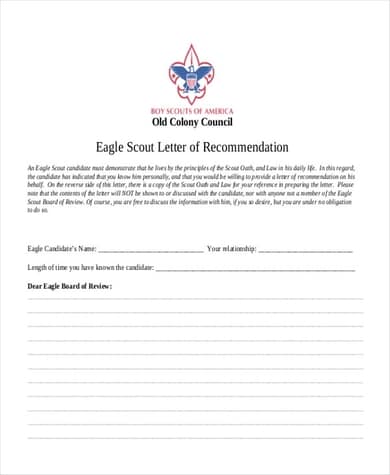
Eagle Scout Recommendation Letter Samples From Friends:
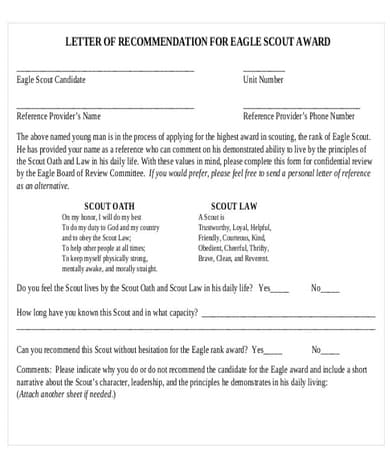
Scouts had always been important part of our society and we must do whatever we can to encourage this trend. This Eagle Scout award is very step in this regard.
How to Use These Eagle Scout recommendation letter Examples
Choose the example that most closely matches employment, education, or professional selection. Use it as a framework rather than sending it unchanged. Rewrite the opening for the intended recipient, replace every placeholder, and remove any paragraph that does not apply to your circumstances.
Information to prepare
Collect role, qualifications, relationship, dates, achievements, notice terms, and next steps. Accurate details help the recipient understand the purpose and respond without avoidable questions. Verify names, dates, figures, addresses, references, and attachment labels before finalizing the letter.
Structure and tone
Open with the reason for writing, present the essential context in a logical order, and finish with a specific next step. Keep the tone professional and evidence-based. Use short paragraphs, explain unfamiliar abbreviations, and avoid copied language that sounds unrelated to the situation.
Practical Writing Guide
Match the sample to the audience
A letter to an employer, school, business, government office, customer, organization, friend, or family member may cover the same subject but require different wording. Consider what the recipient already knows, what authority they have, and which facts they need to make a decision. This prevents unnecessary background from hiding the main message.
Support important statements
Where appropriate, refer to records such as agreements, emails, receipts, policies, schedules, applications, certificates, account references, or earlier correspondence. Mention relevant attachments in the body and label them clearly. Do not include confidential or identifying information unless it is necessary and the delivery method is suitable.
State the requested outcome
Do not make the reader infer what should happen next. Ask for a reply, approval, meeting, confirmation, payment, correction, attendance, or other action in direct but courteous language. When a deadline is necessary, choose a reasonable date and explain its importance.
Common mistakes to avoid
Avoid vague subject lines, inconsistent dates, unsupported claims, overly emotional wording, missing contact details, and sample placeholders left in the final document. Do not repeat the same point in several paragraphs. For legal, contractual, disciplinary, medical, or financial matters, obtain appropriate professional guidance when the wording may affect rights or obligations.
Delivery and follow-up
Send the letter through the channel the recipient expects, whether email, post, hand delivery, or an official portal. Retain the final version and proof of delivery. If no response arrives, follow up by citing the original date, subject, and reference instead of restating the entire matter.
Related Letter Resources
- 18+ Apology Letter Samples (Sorry Letters)
- 50+ Application Letter Samples
- 39+ Government Letter Formats (To Govt Officials)
Customization and Quality Checklist for Eagle Scout recommendation letter
Personalize the introduction
The opening should identify the reason for writing without forcing the reader to search through background information. Replace generic phrases with the correct person’s name, organization, subject, and relevant date. If the recipient expects a reference, account number, event name, position, or earlier conversation to be mentioned, place it near the beginning. A personalized introduction signals that the message was prepared for this situation rather than copied from an unrelated example.
Separate essential facts from supporting detail
List the facts that directly affect the recipient’s decision or response. Present dates consistently and keep events in chronological order when sequence matters. Supporting context can follow, but it should explain rather than distract. If several issues need attention, use short paragraphs or a numbered list so each point can be answered separately. Avoid including rumors, assumptions, or information that cannot be verified.
Review names, dates, and commitments
Small errors can weaken an otherwise professional letter. Confirm the spelling of personal and business names, job titles, postal and email addresses, monetary amounts, dates, deadlines, and document references. Read every promise and requested action carefully. Make sure you have authority to offer, approve, cancel, recommend, authorize, or confirm anything stated in the letter.
Improve readability
Prefer direct sentences and familiar words. Break up long paragraphs and remove repeated ideas. A useful paragraph normally develops one point: the purpose, the supporting facts, the requested action, or the closing. Politeness does not require excessive formality. Clear language is usually more respectful because it saves the reader time and reduces the risk of misunderstanding.
Choose an appropriate closing
The final paragraph should summarize the next step and tell the recipient how to respond. Thank the reader when appropriate, but do not weaken an important request with uncertain wording. Add a typed name, role, organization, and reliable contact method. For printed correspondence, leave space for a signature. For email, use a descriptive subject line and attach files in accessible formats with understandable filenames.
Keep an accurate record
Save the exact version that was sent, along with attachments and proof of delivery. Record the date and delivery method. If the matter requires follow-up, note a suitable reminder and refer back to the original subject and reference. Good record keeping is especially important for employment, financial, contractual, customer-service, authorization, application, and official correspondence.
Frequently Asked Questions
What should eagle scout recommendation letter include?
Include a clear purpose, role, qualifications, relationship, dates, achievements, notice terms, and next steps, and the response or action required. Add supporting documents only when they help the reader assess the message.
Can I edit these examples?
Yes. Replace all sample details, adjust the tone, and remove sections that do not match your situation before sending or printing.
How long should the letter be?
Most letters should be concise enough to read quickly while containing every fact needed for a decision. Use headings or short paragraphs when the matter is detailed.
What should I check before sending?
Verify spelling, recipients, dates, figures, references, attachments, signature, contact details, and any stated deadline. Keep a copy for your records.