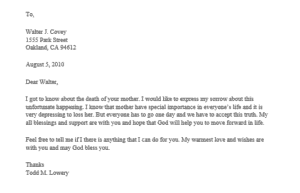
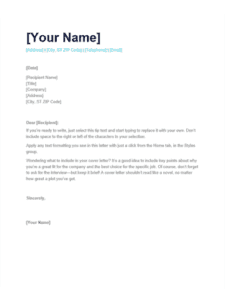
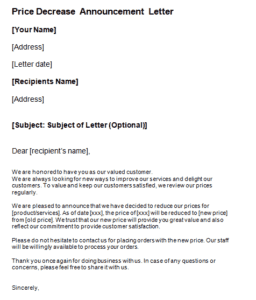
Searching for useful application letter samples that can be personalized quickly? This collection includes 50 or more practical examples created to handle an employment or formal decision with clear facts, a professional tone, and an understandable next step. Rather than offering empty filler, the templates help you introduce the subject directly, establish the necessary context, and make the purpose clear to readers from the opening lines.
These examples can be adapted by applicants, employees, employers, managers, schools, and professional organizations. A complete letter may need the role or decision, effective date, reasons where appropriate, conditions, deadlines, contacts, and required response. Select the version closest to your circumstances, then replace every placeholder and broad claim with accurate names, dates, facts, and expectations. Specific information improves clarity, credibility, and relevance while reducing the risk of delay or misunderstanding.
Start by identifying the result you want and gathering the details that support it. Compare the preview images below, choose the most suitable downloadable template, and revise its wording for your audience and level of formality. Remove anything that does not apply, check grammar and factual accuracy, confirm attachments and contact information, and retain a copy of the final letter for future reference.
Our collection includes application letters for jobs, universities, colleges, banks, teaching positions, nursing positions, internships, referrals, transfers, grants, loans, scholarships, business opportunities, and many other purposes.
What Is an Application Letter?
An application letter is a formal written request to be considered for a particular opportunity. It is most commonly used when applying for employment, but the term can also refer to letters submitted for admission, grants, scholarships, loans, internships, academic programs, and other opportunities.
A job application letter introduces your professional background and explains your interest in a specific position. It should complement your resume rather than simply repeat everything written in your CV.
A good application letter helps the recipient quickly understand:
- What opportunity you are applying for
- Why you are interested in it
- What qualifications you have
- What relevant experience you bring
- Which skills make you a suitable candidate
- What value you could provide
- How the recipient can contact you
Application Letter vs. Cover Letter
The terms application letter and cover letter are often used interchangeably, especially when applying for a job.
A cover letter generally accompanies a resume or CV and is tailored to a particular job opening. An application letter may also be used independently to express interest in a position or opportunity.
In both cases, the goal is to introduce yourself professionally, highlight your most relevant qualifications, and encourage the recipient to consider your application.
How to Write an Application Letter
Writing a strong letter of application requires more than simply stating that you want the position. Your letter should connect your qualifications and experience to the requirements of the opportunity.
1. Research the Position or Opportunity
Before writing your letter, understand what you are applying for. Review the job description, admission requirements, scholarship criteria, or other relevant information.
Identify the qualifications, skills, experience, and qualities the recipient is looking for.
2. Address the Correct Person
Whenever possible, address your application letter to the hiring manager, recruiter, admissions officer, department head, or other appropriate person.
Using a specific name is generally more professional than using a generic greeting.
If the recipient’s name is unavailable, a professional title or department can be used.
3. Write a Strong Opening Paragraph
The first paragraph should immediately explain why you are writing.
For a job application, mention the position you are applying for and, when appropriate, where you learned about the vacancy.
For an academic application, identify the program or course you are applying for.
Avoid lengthy personal introductions. Get to the purpose of the letter quickly.
4. Highlight Your Most Relevant Qualifications
Use the middle section of the letter to explain the qualifications and experience that make you a suitable candidate.
Depending on the application, you may discuss:
- Education
- Professional experience
- Technical skills
- Communication skills
- Leadership experience
- Certifications
- Academic achievements
- Relevant projects
- Professional accomplishments
- Volunteer experience
- Industry knowledge
Choose information that is relevant to the opportunity rather than listing everything you have ever done.
5. Explain Why You Are Interested
Employers, universities, and organizations want to know why you are interested in the opportunity.
Explain what attracted you to the position, organization, institution, program, or opportunity.
A specific explanation is more persuasive than a generic statement such as “I have always wanted to work for your company.”
6. Explain What You Can Offer
A strong application letter focuses not only on what you want but also on what you can contribute.
Connect your experience and skills to the needs of the employer or organization.
For example, explain how your previous experience can help you perform the responsibilities of the position.
7. Keep the Letter Focused
An application letter does not need to repeat your entire resume.
Select two or three of your strongest and most relevant qualifications and explain them clearly.
8. Request an Interview or Next Step
For employment applications, close by expressing your interest in discussing the opportunity further.
You can politely indicate that you would welcome an interview or meeting.
For academic, grant, scholarship, or other applications, explain the appropriate next step when relevant.
9. Proofread Carefully
Before submitting your letter, check spelling, grammar, names, job titles, company names, dates, and contact information.
A well-qualified candidate can make a poor first impression if the application contains obvious errors.
Application Letter Format
A standard application letter format for a job or professional opportunity can include the following:
[Your Full Name]
[Street Address]
[City, State/Province, ZIP/Postal Code]
[Phone Number]
[Email Address]
[Date]
[Hiring Manager’s Name]
[Job Title]
[Company Name]
[Company Address]
Subject: Application for [Job Title]
Dear [Mr./Ms. Last Name]:
I am writing to apply for the position of [Job Title] at [Company Name]. With my background in [field/area] and experience in [relevant experience], I believe I can make a valuable contribution to your organization.
In my previous role at [Company/Organization], I was responsible for [relevant responsibilities or achievement]. This experience helped me develop strong skills in [relevant skills], which I believe are directly applicable to the position.
I am particularly interested in this opportunity because [specific reason]. I would welcome the opportunity to contribute my skills and experience to your team.
Thank you for considering my application. I would appreciate the opportunity to discuss my qualifications in an interview.
Sincerely,
[Your Full Name]
This basic format can be adapted for a job application letter, cover letter, internship application, teacher application, accountant application, nursing application, or other professional application.
Types of Application Letters
There are many types of application letters. The appropriate format depends on the purpose of your application and the recipient.
Job Application Letter
A job application letter is submitted when applying for employment. It introduces your professional background and highlights the qualifications most relevant to the position.
Customize every job application letter for the specific position rather than sending the same generic letter to every employer.
Job Application Cover Letter
A job application cover letter usually accompanies your resume or CV. It should explain why you are interested in the position and highlight qualifications that make you a strong candidate.
Your cover letter should complement your resume rather than simply repeat it.
General Application Letter
A general application letter can be used when you want to express interest in employment or another opportunity without responding to a specific advertised vacancy.
It should explain your area of expertise and the type of opportunity you are seeking.
Application Letter for a Fresher
An application letter for a fresher is designed for a candidate with limited professional experience.
Instead of focusing on years of employment, highlight your education, internships, projects, technical skills, academic achievements, volunteer work, communication abilities, and willingness to learn.
Unsolicited Application Letter
An unsolicited application letter is sent to a company even when no specific vacancy has been advertised.
Explain the type of position you are interested in and why you believe your skills could benefit the organization.
Researching the company before writing this type of application can make your letter more relevant and persuasive.
Application Letter for Referral
An application letter for referral mentions a professional contact who referred you to the organization or position.
If someone has recommended you, mention the person’s name naturally and explain how you learned about the opportunity.
Transfer Application Letter
A transfer application letter is used by an employee or student to request a transfer to another department, location, school, branch, or program.
Clearly explain the reason for the transfer and provide relevant supporting information.
University Application Letter
A university application letter introduces a student’s academic background, interests, achievements, and reasons for applying to a particular university or program.
Follow the institution’s specific admission requirements and application instructions.
College Application Letter
A college application letter can be used to express interest in admission to a college or academic program.
Discuss your educational background, academic goals, relevant achievements, and reasons for choosing the institution.
Scholarship Application Letter
A scholarship application letter explains why you are applying for financial support and why you are a suitable candidate.
Depending on the scholarship, you may discuss academic performance, leadership, extracurricular activities, financial need, career goals, community involvement, or other selection criteria.
Bursary Application Letter
A bursary application letter is used to request educational financial assistance.
Clearly explain your academic situation, financial circumstances when relevant, educational goals, and how the bursary would help you continue your studies.
Grant Application Letter
A grant application letter requests financial support for a project, program, research activity, nonprofit initiative, or other qualifying purpose.
Explain the purpose of the project, the funding required, expected outcomes, and the benefits of supporting the proposal.
Loan Application Letter
A loan application letter can accompany a formal loan request to a bank, financial institution, organization, or other lender.
Clearly state the amount requested, purpose of the loan, proposed repayment arrangements, and other relevant financial information.
Credit Application Letter
A credit application letter may be used by an individual or business to request credit facilities, credit terms, or an increase in an existing credit limit.
Provide the information required by the lender or supplier and make sure all financial details are accurate.
Business Application Letter
A business application letter can be used to apply for a business opportunity, commercial relationship, franchise, contract, service arrangement, or other professional opportunity.
Clearly explain your business background and the purpose of your application.
Work Application Letter
A work application letter is another general term for a letter submitted when seeking employment.
It should highlight your relevant qualifications, experience, skills, and interest in the position.
Teacher Application Letter
A teacher application letter is used when applying for a teaching position.
Highlight your teaching qualifications, classroom experience, subject expertise, educational philosophy, certifications, and other relevant skills.
Science Teacher Application Letter
A science teacher application letter should emphasize relevant science qualifications, teaching experience, laboratory knowledge, curriculum experience, and ability to engage students in scientific learning.
Nurse Application Letter
A nurse application letter should highlight nursing qualifications, clinical experience, certifications, communication skills, patient-care experience, and relevant areas of specialization.
School Physician Application Letter
A school physician application letter can be used by a qualified medical professional applying for a physician position at a school or educational institution.
Emphasize relevant medical qualifications, experience with children or adolescents where applicable, communication skills, and ability to work within an educational environment.
Accountant Application Letter
An accountant application letter should highlight accounting qualifications and relevant experience in financial reporting, bookkeeping, auditing, taxation, budgeting, financial analysis, or accounting software.
Focus on measurable achievements where possible.
Librarian Application Letter
A librarian application letter can highlight experience in library management, cataloging, research assistance, information services, digital resources, collection management, and customer service.
Reporter Application Letter
A reporter application letter should emphasize research, interviewing, writing, fact-checking, communication, journalism experience, and the ability to work under deadlines.
Editor Application Letter
An editor application letter should highlight editing, proofreading, writing, publishing, content management, style-guide knowledge, and attention to detail.
Newspaper Correspondent Application Letter
A newspaper correspondent application letter can emphasize reporting experience, research skills, interviewing, writing ability, local or specialist knowledge, and the ability to meet publication deadlines.
Application Letter to a Bank Manager
An application letter to a bank manager can be used for employment, account-related requests, financial applications, or other banking matters.
Clearly identify the purpose of your application and provide the relevant supporting information.
Summer Job Application Letter
A summer job application letter is commonly used by students and young people applying for temporary seasonal employment.
Highlight your availability, education, relevant skills, previous work experience, reliability, and willingness to learn.
Letter of Intent Application
A letter of intent communicates a person’s serious interest in an opportunity, program, position, business relationship, or other arrangement.
Clearly explain your intentions and the reasons behind them.
Application Letter for a Job With No Experience
If you have no professional experience, you can still write a strong job application letter for a fresher or first-time job seeker.
Focus on transferable skills and evidence of your ability rather than apologizing for your lack of experience.
You can mention:
- Education
- Internships
- Academic projects
- Volunteer work
- Training
- Certifications
- Computer skills
- Communication skills
- Leadership activities
- Teamwork
- Problem-solving
- Relevant coursework
For example, a recent graduate applying for an entry-level accounting position could emphasize accounting coursework, spreadsheet skills, academic projects, and internship experience.
Application Letter Tips for Better Results
A professional application letter should be customized for the specific opportunity.
Tailor Every Letter
Avoid sending the same generic application to every employer or institution. Mention the actual position, organization, program, or opportunity.
Match Your Skills to the Opportunity
Review the requirements and identify your most relevant qualifications.
Use Specific Examples
Instead of simply saying that you are “hardworking,” provide evidence through achievements, responsibilities, projects, or results.
Focus on Value
Explain how your skills and experience can benefit the employer or organization.
Keep It Professional
Use formal but natural language. Avoid excessive jargon and unnecessary exaggeration.
Keep It Concise
A typical job application cover letter should generally be around one page unless the employer or institution requests something different.
Use Professional Contact Information
Include a professional email address and a reliable phone number.
Proofread Your Letter
Check the spelling of the company, position, recipient, and your own contact information before submitting the application.
Common Application Letter Mistakes
Avoid these common mistakes when writing a letter of application:
- Using the same generic letter for every application
- Addressing the wrong employer or hiring manager
- Failing to mention the position
- Repeating the entire resume
- Writing a very long introduction
- Focusing only on what you want
- Making unsupported claims
- Using an unprofessional email address
- Including irrelevant personal information
- Making spelling or grammar mistakes
- Forgetting contact information
- Failing to proofread the final version
- Not following the employer’s application instructions
A strong application letter should make it easy for the reader to see why you are relevant to the opportunity.
Application Letter Template
Use this simple application letter template as a starting point:
[Your Name]
[Address]
[Phone Number]
[Email Address]
[Date]
[Recipient’s Name]
[Job Title / Department]
[Company / Organization Name]
Subject: Application for [Position / Program Name]
Dear [Recipient’s Name]:
I am writing to apply for [position/program/opportunity] at [organization name]. I am interested in this opportunity because [brief reason].
My background in [field] has provided me with experience in [relevant skills or responsibilities]. In particular, I have developed strong skills in [skill 1], [skill 2], and [skill 3].
I believe my qualifications and experience would allow me to contribute effectively to [organization/program]. I am particularly interested in [specific aspect of the opportunity].
Thank you for considering my application. I would welcome the opportunity to discuss my qualifications further.
Sincerely,
[Your Full Name]
Application Letter Samples (Click to Download):
University Application Letter
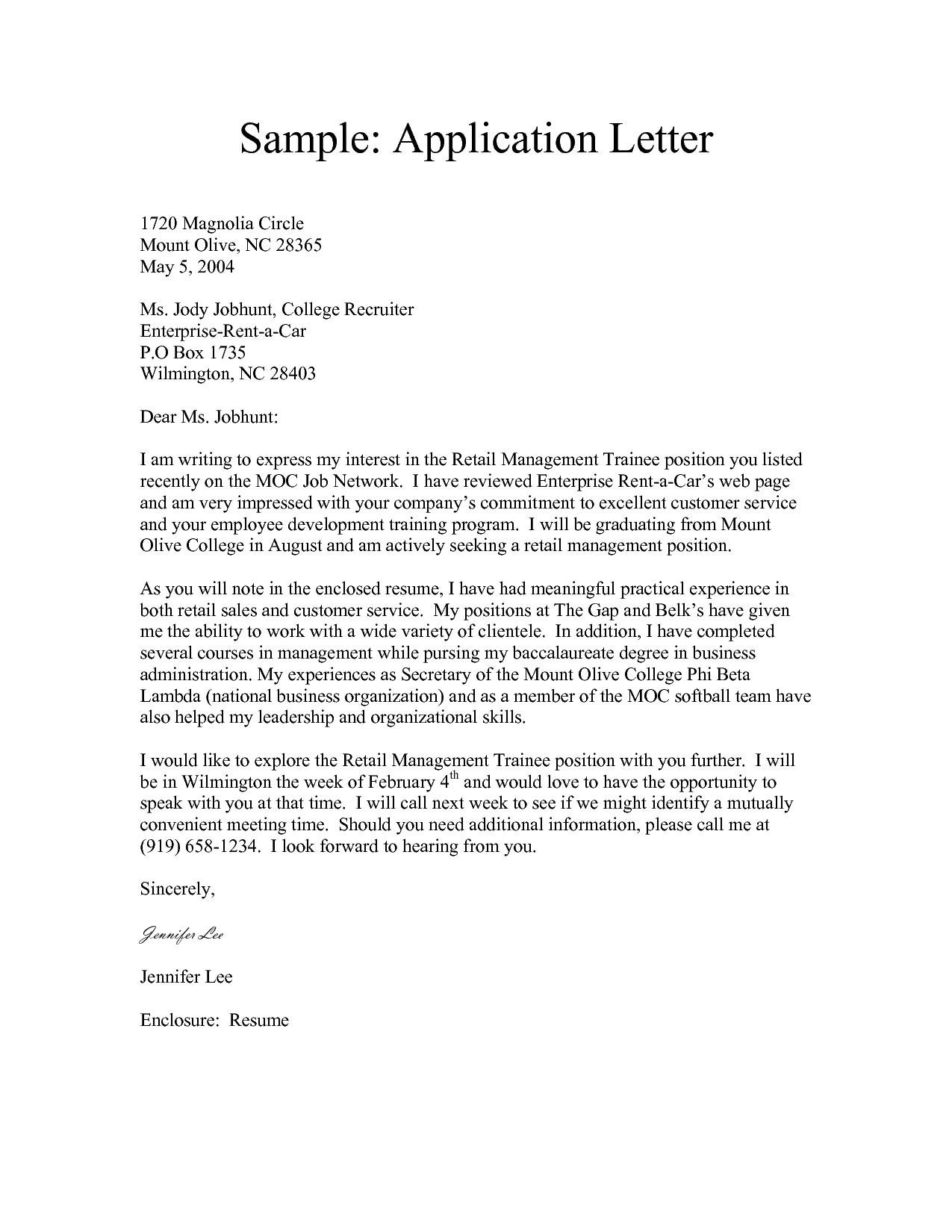
American Application-Letter
Federal Application Letter
State Application Letter
University Application Letter
Download Accountant Application Letter
Download Librarian Application Letter
School Physician Application Letter
Nurse Application Letter
Science Teacher Application Letter
Reporter Application Letter
Editor Application Letter
Newspaper Correspondent Application Letter
Teacher Application Letter
Application Letter to Bank Manager
Application Letter by Fresher
Application Letter for Referral
Transfer Application Letter
Unsolicited Application Letter
Change in Address Application Letter
Application Letter for the post of Lecturer
Change in Address Application Letter
Credit Application Letter
College application letter
College application letter
Summer Job Application letter
Sample General Application letter
Marriage Leave Application
Grant Application Letter
Loan Application Letter
Credit Application Letter
Letter Of Intent Application
College Application Letter
Business Application Letter
Work Application Letter
Bursary Application Letter
Sample Application Cover Letter
Job Application Cover Letter
Job Application E-mail Letter
Job Application Letter 2nd
Sample Application Letter
Job Application Letter
University Application Letter
We do hope that you will like these free application letter samples.
More Sample Application Letters:
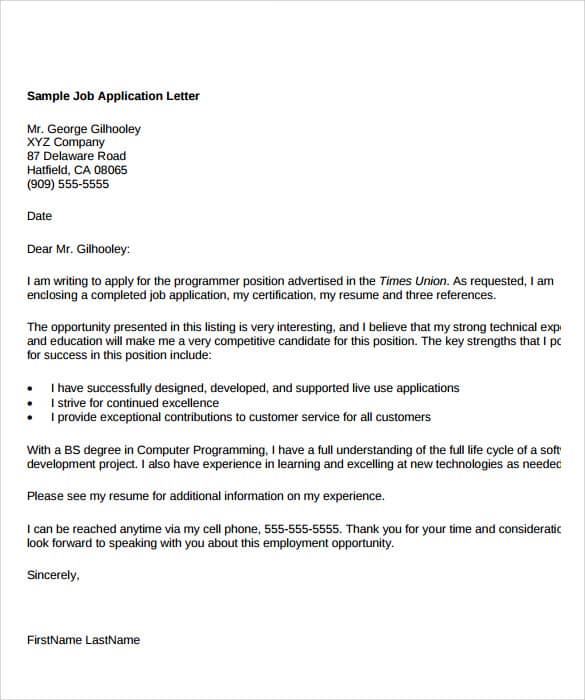





How to Write and Customize Application Letter
Choose the sample that most closely matches the employment decision or workplace situation. Treat it as a framework rather than finished correspondence. Rewrite the opening so the recipient immediately understands why you are writing, then replace every placeholder with verified information.
Information to prepare
Collect job title, dates, policy references, responsibilities, and next steps. Including concrete information makes application letter easier to understand and reduces unnecessary follow-up. Do not include confidential or unrelated details simply because they appear in a sample.
Tone and final review
Use a professional and unambiguous tone. Organize the information in chronological or logical order, state the action you expect, and provide a reasonable response method or deadline. Before sending, confirm spelling, contact details, dates, attachments, and the recipient’s correct title. The final version should document the employment matter without sounding copied or unnecessarily complicated.
Related Letter Resources
- 18+ Apology Letter Samples (Sorry Letters)
- 39+ Government Letter Formats (To Govt Officials)
- 2+ Disagreement Letter with a False Accusation
How to Customize Application Letter Before Use
Use the examples on this page as a starting point, then adapt the wording to the exact reader and purpose. Replace every placeholder with accurate names, dates, reference numbers, contact details, deadlines, and supporting facts. Keep the message focused on one main outcome so the recipient can understand and respond without guessing.
Before sending your application letter, check that the tone suits the relationship, the subject line is specific, and the requested action is easy to identify. Remove irrelevant sample text, verify attachments, and proofread the final version for grammar, consistency, and factual accuracy. A concise, personalized letter is usually more credible than a generic copy.
20 Additional Application Letters for Different Opportunities
These additional application letters cover a wider range of jobs, internships, apprenticeships, volunteer roles, internal opportunities and academic applications.
- 1. Administrative Assistant Application Letter
- 2. Customer Service Representative Application
- 3. Sales Executive Application Letter
- 4. Marketing Assistant Application Letter
- 5. Software Developer Application Letter
- 6. Graphic Designer Application Letter
- 7. HR Officer Application Letter
- 8. Project Coordinator Application Letter
- 9. Warehouse Supervisor Application Letter
- 10. Receptionist Application Letter
- 11. Internship Application Letter
- 12. Apprenticeship Application Letter
- 13. Volunteer Position Application Letter
- 14. Remote Job Application Letter
- 15. Part-Time Job Application Letter
- 16. Internal Promotion Application Letter
- 17. Graduate Program Application Letter
- 18. Research Assistant Application Letter
- 19. Event Coordinator Application Letter
- 20. Operations Assistant Application Letter
1. Administrative Assistant Application Letter
[Date]
[Your Name]
[Your Address]
[Email Address] | [Phone Number]
[Hiring Manager]
[Organization]
[Address]
Subject: Application for Administrative Assistant Position
Dear [Hiring Manager],
I am writing to apply for the Administrative Assistant position advertised on [source/date].
My experience includes scheduling, document preparation, records, communication, and supporting multiple priorities with accuracy. My relevant background includes [specific skill, qualification, project, experience, or achievement], and I would tailor my contribution to the requirements of this opportunity.
Please consider my application for interview based on the requirements of the role. Thank you for considering my application. I would welcome the opportunity to provide further information or discuss my suitability.
Sincerely,
[Signature]
[Your Name]
2. Customer Service Representative Application
[Date]
[Your Name]
[Your Address]
[Email Address] | [Phone Number]
[Hiring Manager]
[Organization]
[Address]
Subject: Application for Customer Service Representative
Dear [Hiring Manager],
I am writing to apply for the Customer Service Representative position at [company].
I have experience handling customer inquiries, resolving routine problems, documenting cases, and communicating clearly across phone, email, or chat. My relevant background includes [specific skill, qualification, project, experience, or achievement], and I would tailor my contribution to the requirements of this opportunity.
Please consider how my service experience aligns with your customer-support needs. Thank you for considering my application. I would welcome the opportunity to provide further information or discuss my suitability.
Sincerely,
[Signature]
[Your Name]
3. Sales Executive Application Letter
[Date]
[Your Name]
[Your Address]
[Email Address] | [Phone Number]
[Hiring Manager]
[Organization]
[Address]
Subject: Application for Sales Executive Position
Dear [Hiring Manager],
I am writing to apply for the Sales Executive position with [company].
My background includes prospecting, relationship management, sales planning, account follow-up, and working toward measurable targets. My relevant background includes [specific skill, qualification, project, experience, or achievement], and I would tailor my contribution to the requirements of this opportunity.
Please consider my application and the attached evidence of relevant sales achievements. Thank you for considering my application. I would welcome the opportunity to provide further information or discuss my suitability.
Sincerely,
[Signature]
[Your Name]
4. Marketing Assistant Application Letter
[Date]
[Your Name]
[Your Address]
[Email Address] | [Phone Number]
[Hiring Manager]
[Organization]
[Address]
Subject: Application for Marketing Assistant Position
Dear [Hiring Manager],
I am writing to apply for the Marketing Assistant role at [company].
My relevant skills include content coordination, campaign support, research, basic analytics, social media, and organized project follow-up. My relevant background includes [specific skill, qualification, project, experience, or achievement], and I would tailor my contribution to the requirements of this opportunity.
Please consider my application for the role and an opportunity to discuss how I can support the marketing team. Thank you for considering my application. I would welcome the opportunity to provide further information or discuss my suitability.
Sincerely,
[Signature]
[Your Name]
5. Software Developer Application Letter
[Date]
[Your Name]
[Your Address]
[Email Address] | [Phone Number]
[Hiring Manager / Technical Recruiter]
[Organization]
[Address]
Subject: Application for Software Developer Position
Dear [Hiring Manager / Technical Recruiter],
I am writing to apply for the Software Developer role for [team/product].
My experience includes [languages/frameworks], version control, testing, debugging, and delivering maintainable features in collaboration with others. My relevant background includes [specific skill, qualification, project, experience, or achievement], and I would tailor my contribution to the requirements of this opportunity.
Please review my portfolio or project examples together with the requirements of the position. Thank you for considering my application. I would welcome the opportunity to provide further information or discuss my suitability.
Sincerely,
[Signature]
[Your Name]
6. Graphic Designer Application Letter
[Date]
[Your Name]
[Your Address]
[Email Address] | [Phone Number]
[Hiring Manager / Creative Director]
[Organization]
[Address]
Subject: Application for Graphic Designer Position
Dear [Hiring Manager / Creative Director],
I am writing to apply for the Graphic Designer opportunity at [company].
My portfolio demonstrates work in [branding, digital, print, social, UI, or other relevant areas] with attention to briefs, consistency, and deadlines. My relevant background includes [specific skill, qualification, project, experience, or achievement], and I would tailor my contribution to the requirements of this opportunity.
Please consider my portfolio and application for a design interview or practical assessment. Thank you for considering my application. I would welcome the opportunity to provide further information or discuss my suitability.
Sincerely,
[Signature]
[Your Name]
7. HR Officer Application Letter
[Date]
[Your Name]
[Your Address]
[Email Address] | [Phone Number]
[Hiring Manager / HR Director]
[Organization]
[Address]
Subject: Application for HR Officer Position
Dear [Hiring Manager / HR Director],
I am writing to apply for the HR Officer position at [organization].
My experience includes employee records, recruitment coordination, policy administration, onboarding, and confidential communication. My relevant background includes [specific skill, qualification, project, experience, or achievement], and I would tailor my contribution to the requirements of this opportunity.
Please consider my application in light of the role’s HR operations and people-support responsibilities. Thank you for considering my application. I would welcome the opportunity to provide further information or discuss my suitability.
Sincerely,
[Signature]
[Your Name]
8. Project Coordinator Application Letter
[Date]
[Your Name]
[Your Address]
[Email Address] | [Phone Number]
[Hiring Manager]
[Organization]
[Address]
Subject: Application for Project Coordinator Position
Dear [Hiring Manager],
I am writing to apply for the Project Coordinator position with [organization].
I have supported schedules, action tracking, documentation, stakeholder communication, risk follow-up, and meeting coordination across projects. My relevant background includes [specific skill, qualification, project, experience, or achievement], and I would tailor my contribution to the requirements of this opportunity.
Please consider my organizational and coordination experience for the advertised role. Thank you for considering my application. I would welcome the opportunity to provide further information or discuss my suitability.
Sincerely,
[Signature]
[Your Name]
9. Warehouse Supervisor Application Letter
[Date]
[Your Name]
[Your Address]
[Email Address] | [Phone Number]
[Hiring Manager / Operations Manager]
[Organization]
[Address]
Subject: Application for Warehouse Supervisor Position
Dear [Hiring Manager / Operations Manager],
I am writing to apply for the Warehouse Supervisor position at [company].
My relevant experience includes inventory control, receiving and dispatch, team supervision, safety procedures, shift planning, and accurate records. My relevant background includes [specific skill, qualification, project, experience, or achievement], and I would tailor my contribution to the requirements of this opportunity.
Please consider my application for an interview focused on the operational requirements of the warehouse. Thank you for considering my application. I would welcome the opportunity to provide further information or discuss my suitability.
Sincerely,
[Signature]
[Your Name]
10. Receptionist Application Letter
[Date]
[Your Name]
[Your Address]
[Email Address] | [Phone Number]
[Hiring Manager / Office Manager]
[Organization]
[Address]
Subject: Application for Receptionist Position
Dear [Hiring Manager / Office Manager],
I am writing to apply for the Receptionist position at [organization].
I have experience greeting visitors, handling calls, scheduling appointments, managing front-desk records, and communicating professionally. My relevant background includes [specific skill, qualification, project, experience, or achievement], and I would tailor my contribution to the requirements of this opportunity.
Please consider my application for this customer-facing administrative role. Thank you for considering my application. I would welcome the opportunity to provide further information or discuss my suitability.
Sincerely,
[Signature]
[Your Name]
11. Internship Application Letter
[Date]
[Your Name]
[Your Address]
[Email Address] | [Phone Number]
[Internship Coordinator / Hiring Manager]
[Organization]
[Address]
Subject: Application for [Field] Internship
Dear [Internship Coordinator / Hiring Manager],
I am writing to apply for the [field/department] internship for [term].
My studies and projects in [subjects] have given me a foundation that I would like to apply in a supervised professional environment. My relevant background includes [specific skill, qualification, project, experience, or achievement], and I would tailor my contribution to the requirements of this opportunity.
Please consider my application for the internship and the learning objectives described in my résumé. Thank you for considering my application. I would welcome the opportunity to provide further information or discuss my suitability.
Sincerely,
[Signature]
[Your Name]
12. Apprenticeship Application Letter
[Date]
[Your Name]
[Your Address]
[Email Address] | [Phone Number]
[Apprenticeship Coordinator / Employer]
[Organization]
[Address]
Subject: Application for [Trade/Field] Apprenticeship
Dear [Apprenticeship Coordinator / Employer],
I am writing to apply for the apprenticeship opportunity in [trade/field].
I am prepared to combine structured training with practical work and can demonstrate [relevant coursework, aptitude, reliability, or basic experience]. My relevant background includes [specific skill, qualification, project, experience, or achievement], and I would tailor my contribution to the requirements of this opportunity.
Please consider me for the apprenticeship selection process. Thank you for considering my application. I would welcome the opportunity to provide further information or discuss my suitability.
Sincerely,
[Signature]
[Your Name]
13. Volunteer Position Application Letter
[Date]
[Your Name]
[Your Address]
[Email Address] | [Phone Number]
[Volunteer Coordinator]
[Organization]
[Address]
Subject: Application to Volunteer With [Organization]
Dear [Volunteer Coordinator],
I am writing to apply for a volunteer role supporting [program/cause].
I can contribute [skills/time/experience] and am willing to follow training, safeguarding, scheduling, and supervision requirements. My relevant background includes [specific skill, qualification, project, experience, or achievement], and I would tailor my contribution to the requirements of this opportunity.
Please consider my application for a suitable volunteer assignment. Thank you for considering my application. I would welcome the opportunity to provide further information or discuss my suitability.
Sincerely,
[Signature]
[Your Name]
14. Remote Job Application Letter
[Date]
[Your Name]
[Your Address]
[Email Address] | [Phone Number]
[Hiring Manager]
[Organization]
[Address]
Subject: Application for Remote [Role] Position
Dear [Hiring Manager],
I am writing to apply for the remote [role] position advertised by [company].
In addition to the role-specific skills, I am experienced with independent planning, written communication, online collaboration, and reliable availability. My relevant background includes [specific skill, qualification, project, experience, or achievement], and I would tailor my contribution to the requirements of this opportunity.
Please consider my application and my ability to work effectively in a distributed team. Thank you for considering my application. I would welcome the opportunity to provide further information or discuss my suitability.
Sincerely,
[Signature]
[Your Name]
15. Part-Time Job Application Letter
[Date]
[Your Name]
[Your Address]
[Email Address] | [Phone Number]
[Hiring Manager]
[Organization]
[Address]
Subject: Application for Part-Time [Role]
Dear [Hiring Manager],
I am writing to apply for the part-time [role] position for [days/hours if stated].
My availability is [schedule], and my relevant experience includes [skills/tasks] that match the advertised responsibilities. My relevant background includes [specific skill, qualification, project, experience, or achievement], and I would tailor my contribution to the requirements of this opportunity.
Please consider my application for the stated part-time schedule. Thank you for considering my application. I would welcome the opportunity to provide further information or discuss my suitability.
Sincerely,
[Signature]
[Your Name]
16. Internal Promotion Application Letter
[Date]
[Your Name]
[Your Address]
[Email Address] | [Phone Number]
[Manager / HR Department]
[Organization]
[Address]
Subject: Application for Internal [Role] Opportunity
Dear [Manager / HR Department],
I am writing to apply for the internal opening for [target role].
In my current role as [role], I have developed relevant experience in [areas] and achieved [specific measurable result or responsibility]. My relevant background includes [specific skill, qualification, project, experience, or achievement], and I would tailor my contribution to the requirements of this opportunity.
Please consider my application under the same published selection criteria used for the position. Thank you for considering my application. I would welcome the opportunity to provide further information or discuss my suitability.
Sincerely,
[Signature]
[Your Name]
17. Graduate Program Application Letter
[Date]
[Your Name]
[Your Address]
[Email Address] | [Phone Number]
[Admissions Committee]
[Organization]
[Address]
Subject: Application for [Graduate Program]
Dear [Admissions Committee],
I am writing to apply for admission to the [program] beginning [term/year].
My academic background, relevant projects, and professional interests align with the program’s focus on [area]. My relevant background includes [specific skill, qualification, project, experience, or achievement], and I would tailor my contribution to the requirements of this opportunity.
Please consider my academic record, statement, and supporting documents for admission. Thank you for considering my application. I would welcome the opportunity to provide further information or discuss my suitability.
Sincerely,
[Signature]
[Your Name]
18. Research Assistant Application Letter
[Date]
[Your Name]
[Your Address]
[Email Address] | [Phone Number]
[Professor / Research Lead]
[Organization]
[Address]
Subject: Application for Research Assistant Position
Dear [Professor / Research Lead],
I am writing to apply for the Research Assistant position on [project/lab].
My background includes [methods, software, subject knowledge, literature review, data work, or laboratory skills] relevant to the project. My relevant background includes [specific skill, qualification, project, experience, or achievement], and I would tailor my contribution to the requirements of this opportunity.
Please consider my application and whether my skills match the project’s current research needs. Thank you for considering my application. I would welcome the opportunity to provide further information or discuss my suitability.
Sincerely,
[Signature]
[Your Name]
19. Event Coordinator Application Letter
[Date]
[Your Name]
[Your Address]
[Email Address] | [Phone Number]
[Hiring Manager]
[Organization]
[Address]
Subject: Application for Event Coordinator Position
Dear [Hiring Manager],
I am writing to apply for the Event Coordinator role at [organization].
My experience includes schedules, vendors, budgets, registration, venue logistics, communications, and day-of-event coordination. My relevant background includes [specific skill, qualification, project, experience, or achievement], and I would tailor my contribution to the requirements of this opportunity.
Please consider my application for an interview based on the role’s planning and stakeholder requirements. Thank you for considering my application. I would welcome the opportunity to provide further information or discuss my suitability.
Sincerely,
[Signature]
[Your Name]
20. Operations Assistant Application Letter
[Date]
[Your Name]
[Your Address]
[Email Address] | [Phone Number]
[Hiring Manager / Operations Manager]
[Organization]
[Address]
Subject: Application for Operations Assistant Position
Dear [Hiring Manager / Operations Manager],
I am writing to apply for the Operations Assistant position with [company].
I have experience supporting routine operations, records, supplier follow-up, scheduling, reporting, and problem tracking in a structured environment. My relevant background includes [specific skill, qualification, project, experience, or achievement], and I would tailor my contribution to the requirements of this opportunity.
Please consider my application and the practical support I could provide to the operations team. Thank you for considering my application. I would welcome the opportunity to provide further information or discuss my suitability.
Sincerely,
[Signature]
[Your Name]
Frequently Asked Questions About Application Letters
What is an application letter?
An application letter is a formal letter used to apply for a job, university, college, scholarship, grant, loan, internship, or another opportunity. It introduces the applicant and explains their qualifications and interest.
Is an application letter the same as a cover letter?
In many employment situations, the terms are used interchangeably. A cover letter normally accompanies a resume or CV and is tailored to a specific job, while an application letter can also refer more broadly to a formal letter submitted for employment, admission, funding, or another opportunity.
How do I write a good application letter?
Start by identifying the opportunity, address the appropriate recipient, explain your interest, highlight your most relevant qualifications, provide specific examples, explain what you can contribute, and finish with a professional closing.
What should I include in a job application letter?
Include your contact information, date, recipient information, position being applied for, relevant qualifications, experience, skills, reason for applying, value you can offer, and a professional closing.
How long should an application letter be?
For most job applications, a concise one-page letter is appropriate unless the employer provides different instructions. Academic, grant, or other applications may have different requirements.
Can I use an application letter template?
Yes. An application letter template can provide a useful structure. However, customize the content for the specific job, organization, university, scholarship, or opportunity.
How do I write an application letter with no experience?
Focus on education, internships, projects, training, volunteer work, certifications, transferable skills, and achievements. Explain how these experiences have prepared you for the opportunity.
Should I attach my resume to an application letter?
For many job applications, yes. A cover letter and resume serve different purposes: the resume provides a structured summary of your background, while the cover letter explains why your qualifications are relevant to the specific position.
How do I start an application letter?
Start by clearly stating the position or opportunity you are applying for. For example, you can write: “I am writing to apply for the position of [Job Title] at [Company Name].” You can then briefly highlight your most relevant qualification.
How do I end an application letter?
Thank the recipient for considering your application and express your interest in discussing the opportunity further. For a job application, you can politely request an interview or state that you look forward to hearing from the employer.
What is an unsolicited application letter?
An unsolicited application letter is sent to an organization even though no specific job vacancy has been advertised. It introduces your qualifications and expresses interest in suitable current or future opportunities.
What is a fresher application letter?
A fresher application letter is written by someone with little or no professional work experience, often a recent graduate or student. It focuses on education, skills, projects, internships, achievements, and potential.
Should an application letter be formal?
Yes. An application letter should generally use professional language and a respectful tone. It should still sound natural and should be tailored to the recipient and opportunity.
What makes an application letter effective?
An effective application letter is specific, relevant, concise, well organized, error-free, and focused on the value you can bring to the employer or organization. It should give the reader a clear reason to consider your application.
Frequently Asked Questions About Application Letters
What is an application letter?
An application letter is a formal letter used to apply for a job, university, college, scholarship, grant, loan, internship, or another opportunity. It introduces the applicant and explains their qualifications and interest.
Is an application letter the same as a cover letter?
In many employment situations, the terms are used interchangeably. A cover letter normally accompanies a resume or CV and is tailored to a specific job, while an application letter can also refer more broadly to a formal letter submitted for employment, admission, funding, or another opportunity.
How do I write a good application letter?
Start by identifying the opportunity, address the appropriate recipient, explain your interest, highlight your most relevant qualifications, provide specific examples, explain what you can contribute, and finish with a professional closing.
What should I include in a job application letter?
Include your contact information, date, recipient information, position being applied for, relevant qualifications, experience, skills, reason for applying, value you can offer, and a professional closing.
How long should an application letter be?
For most job applications, a concise one-page letter is appropriate unless the employer provides different instructions. Academic, grant, or other applications may have different requirements.
Can I use an application letter template?
Yes. An application letter template can provide a useful structure. However, customize the content for the specific job, organization, university, scholarship, or opportunity.
How do I write an application letter with no experience?
Focus on education, internships, projects, training, volunteer work, certifications, transferable skills, and achievements. Explain how these experiences have prepared you for the opportunity.
Should I attach my resume to an application letter?
For many job applications, yes. A cover letter and resume serve different purposes: the resume provides a structured summary of your background, while the cover letter explains why your qualifications are relevant to the specific position.
How do I start an application letter?
Start by clearly stating the position or opportunity you are applying for. For example, you can write: “I am writing to apply for the position of [Job Title] at [Company Name].” You can then briefly highlight your most relevant qualification.
How do I end an application letter?
Thank the recipient for considering your application and express your interest in discussing the opportunity further. For a job application, you can politely request an interview or state that you look forward to hearing from the employer.
What is an unsolicited application letter?
An unsolicited application letter is sent to an organization even though no specific job vacancy has been advertised. It introduces your qualifications and expresses interest in suitable current or future opportunities.
What is a fresher application letter?
A fresher application letter is written by someone with little or no professional work experience, often a recent graduate or student. It focuses on education, skills, projects, internships, achievements, and potential.
Should an application letter be formal?
Yes. An application letter should generally use professional language and a respectful tone. It should still sound natural and should be tailored to the recipient and opportunity.
What makes an application letter effective?
An effective application letter is specific, relevant, concise, well organized, error-free, and focused on the value you can bring to the employer or organization. It should give the reader a clear reason to consider your application.