Find clear, adaptable encouragement letters samples for personal, professional, and formal correspondence. This collection contains 10 or more examples designed to express a sincere message in language suited to the relationship and occasion. Each introduction is focused on the specific purpose of this letter type, giving readers useful context from the start instead of repeating generic advice that could belong on any template page.
The samples can help friends, partners, relatives, colleagues, customers, and community members. Depending on your situation, an effective letter may include the recipient, occasion, a specific memory or contribution, genuine feeling, and closing. Choose the example nearest to your intended outcome, then replace sample wording and placeholders with correct names, dates, facts, references, and expectations. Specific details make the final document easier to trust, understand, and act upon.
Before downloading, collect the information and supporting material you may need. Use the preview images below to compare structures, select the most relevant downloadable template, and tailor its language to the recipient and level of formality. Remove irrelevant sections, proofread all names and figures, check attachments and deadlines, and save a copy of the finished letter for your records and any later follow-up.
Find Sample Encouragement Letters Here
Encouragement Letter To Friend



Encouragement Letter To Employee

Encouragement Letter To Team

Encouragement Letter From Manager

Blank Encouragement Letter Sample

Encouragement Letter To Disappointed Employee
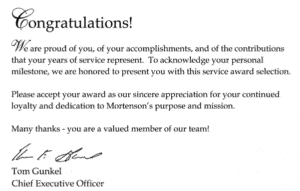
Encouragement/Appreciation Letter

Encouragement Letter Example

Encouragement Letter Format

Encouragement Letter For Business Use

How to Use These Encouragement Letters Examples
Choose the example that best matches a relationship, milestone, illness, loss, or caring gesture. Use it as a framework, rewrite the opening, replace every placeholder, and remove text that does not fit.
Information to prepare
Collect recipient, occasion, specific memory or contribution, sincere feeling, and appropriate future wish. Verify names, dates, figures, addresses, references, and attachments.
Structure and tone
State the reason first, present essential context logically, and close with a specific next step. Keep the tone warm, personal, and considerate.
Practical Writing Guide
Match the audience
Consider what the recipient already knows, what authority they hold, and which information they need. Employers, schools, companies, public offices, organizations, and personal contacts require different detail and formality.
Support important statements
Refer to relevant agreements, emails, receipts, policies, schedules, applications, certificates, account references, or previous correspondence. Label attachments and protect confidential information.
State the outcome
Ask directly for the reply, approval, meeting, confirmation, correction, attendance, or other action needed. Use a reasonable deadline and explain why it matters.
Avoid common mistakes
Avoid vague subjects, inconsistent dates, unsupported claims, emotional wording, repeated points, missing contacts, and copied placeholders. Seek suitable guidance when wording affects legal, contractual, disciplinary, medical, or financial rights.
Delivery and follow-up
Use the expected delivery channel and retain the final copy and proof. Follow up by citing the original date, subject, and reference.
Related Letter Resources
Customization and Quality Checklist for Encouragement Letters
Personalize the introduction
The opening should identify the reason for writing without forcing the reader to search through background information. Replace generic phrases with the correct person’s name, organization, subject, and relevant date. If the recipient expects a reference, account number, event name, position, or earlier conversation to be mentioned, place it near the beginning. A personalized introduction signals that the message was prepared for this situation rather than copied from an unrelated example.
Separate essential facts from supporting detail
List the facts that directly affect the recipient’s decision or response. Present dates consistently and keep events in chronological order when sequence matters. Supporting context can follow, but it should explain rather than distract. If several issues need attention, use short paragraphs or a numbered list so each point can be answered separately. Avoid including rumors, assumptions, or information that cannot be verified.
Review names, dates, and commitments
Small errors can weaken an otherwise professional letter. Confirm the spelling of personal and business names, job titles, postal and email addresses, monetary amounts, dates, deadlines, and document references. Read every promise and requested action carefully. Make sure you have authority to offer, approve, cancel, recommend, authorize, or confirm anything stated in the letter.
Improve readability
Prefer direct sentences and familiar words. Break up long paragraphs and remove repeated ideas. A useful paragraph normally develops one point: the purpose, the supporting facts, the requested action, or the closing. Politeness does not require excessive formality. Clear language is usually more respectful because it saves the reader time and reduces the risk of misunderstanding.
Choose an appropriate closing
The final paragraph should summarize the next step and tell the recipient how to respond. Thank the reader when appropriate, but do not weaken an important request with uncertain wording. Add a typed name, role, organization, and reliable contact method. For printed correspondence, leave space for a signature. For email, use a descriptive subject line and attach files in accessible formats with understandable filenames.
Keep an accurate record
Save the exact version that was sent, along with attachments and proof of delivery. Record the date and delivery method. If the matter requires follow-up, note a suitable reminder and refer back to the original subject and reference. Good record keeping is especially important for employment, financial, contractual, customer-service, authorization, application, and official correspondence.
Frequently Asked Questions
What should encouragement letters include?
Include a clear purpose, recipient, occasion, specific memory or contribution, sincere feeling, and appropriate future wish, and the action required. Add supporting records only when useful.
Can I edit these examples?
Yes. Replace every sample detail, adjust the tone, and remove sections that do not apply.
How long should it be?
Keep it concise while including every fact needed for understanding and response.
What should I check?
Verify recipients, dates, figures, references, attachments, signature, contacts, and deadline. Keep a copy.