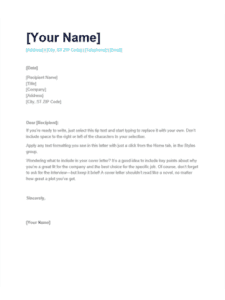
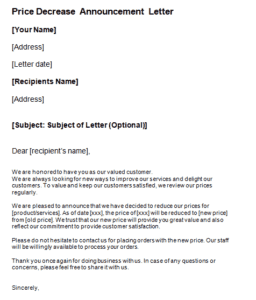
Searching for useful feedback letters samples that can be personalized quickly? This collection includes 13 or more practical examples created to communicate the purpose clearly, add useful context, and guide the recipient toward the intended response. Rather than offering empty filler, the templates help you introduce the subject directly, establish the necessary context, and make the purpose clear to readers from the opening lines.
These examples can be adapted by individuals, employees, businesses, schools, organizations, and community groups. A complete letter may need the recipient, reason for writing, dates, supporting facts, requested action, and contact details. Select the version closest to your circumstances, then replace every placeholder and broad claim with accurate names, dates, facts, and expectations. Specific information improves clarity, credibility, and relevance while reducing the risk of delay or misunderstanding.
Start by identifying the result you want and gathering the details that support it. Compare the preview images below, choose the most suitable downloadable template, and revise its wording for your audience and level of formality. Remove anything that does not apply, check grammar and factual accuracy, confirm attachments and contact information, and retain a copy of the final letter for future reference.
What Is a Feedback Letter?
A feedback letter is a written response that communicates an opinion, observation, evaluation, reaction, or assessment about a person, product, service, event, interview, transaction, or experience.
A feedback letter may be written by an employer, manager, customer, client, teacher, student, interviewer, hotel guest, business partner, or another individual who has been asked to provide an evaluation.
Feedback can be positive when you want to recognize excellent performance, or it can be constructive when you want to identify areas that need improvement. In either case, the letter should remain professional and focus on useful information rather than personal criticism.
When Do You Need a Feedback Letter?
There are many situations in which a formal feedback letter may be appropriate. Common examples include:
- Providing feedback after a job interview
- Giving employee performance feedback
- Responding to a customer service experience
- Providing feedback about a product or service
- Giving feedback to a hotel or hospitality business
- Responding to a customer complaint
- Providing academic or educational feedback
- Giving client feedback after completing a project
- Providing feedback about an event or training program
- Giving positive feedback to an employee or colleague
- Providing constructive criticism about a service
- Requesting feedback from a customer or client
- Responding to a request for professional feedback
- Providing feedback about an interview candidate
- Giving feedback about a business transaction
The appropriate wording and format will depend on the purpose of the letter and the person receiving it.
How to Write a Feedback Letter
Writing effective feedback requires more than simply saying whether something was good or bad. Useful feedback explains what happened, what worked well, what could be improved, and why.
1. Identify the Purpose of Your Feedback
Begin by deciding exactly what you want your feedback to communicate. Are you thanking someone for excellent service, evaluating an employee, responding to an interview, reviewing a product, or identifying a problem?
Having a clear purpose will help you keep the letter focused.
2. Start With a Professional Introduction
Begin your feedback letter with a suitable greeting and a short introduction explaining why you are writing.
For example, you might state that you are writing in response to a recent service experience, interview, project, training session, or request for feedback.
3. Mention Positive Points
If something was done particularly well, mention it specifically. Positive feedback is more useful when you identify the exact behavior, service, or result that you appreciated.
Instead of simply writing “Good job,” explain what was done well and how it contributed to a successful outcome.
4. Explain Areas for Improvement
When providing constructive or negative feedback, describe the problem objectively. Avoid personal attacks, emotional language, or statements that could unnecessarily offend the recipient.
Explain what could have been handled differently and, where appropriate, suggest a practical improvement.
5. Be Specific and Honest
Good feedback is based on facts and actual observations. Avoid vague statements that do not provide useful information.
For example, instead of saying “The service was bad,” explain which part of the service did not meet your expectations and what could have improved the experience.
6. Keep the Tone Professional
Even when you are dissatisfied, use polite and professional language. A respectful negative feedback letter can communicate a serious concern without becoming unnecessarily confrontational.
Likewise, positive feedback should be genuine and specific rather than exaggerated.
7. End With an Appropriate Closing
Thank the recipient for considering your feedback when appropriate. If you expect a response or further action, clearly mention it before ending the letter.
Feedback Letter Format
A standard feedback letter format can include the following elements:
Sender’s Name
Address or Contact Information
Date
Recipient’s Name
Job Title / Organization
Address
Subject: Feedback Regarding [Service / Interview / Employee / Product / Experience]
Dear [Name]:
I am writing to provide feedback regarding [specific subject or experience].
[Explain the reason for the feedback and provide relevant details.]
[Describe positive aspects, concerns, observations, or areas that could be improved.]
[Provide constructive suggestions or recommendations if appropriate.]
Thank you for taking the time to consider my feedback. I hope these comments are helpful.
Sincerely,
[Your Name]
This basic structure can be adapted for almost any feedback letter sample, including employee feedback, customer feedback, interview feedback, client feedback, academic feedback, and service feedback.
Types of Feedback Letters
Different situations require different types of feedback. Below are some common feedback letter examples.
Job Interview Feedback Letter
A job interview feedback letter provides comments about an applicant’s interview performance. It may be sent by a recruiter, hiring manager, interviewer, or organization.
Interview feedback can discuss communication skills, qualifications, experience, responses to interview questions, strengths, and areas that could be improved.
Positive Feedback Letter
A positive feedback letter recognizes good performance, excellent service, successful work, or a particularly positive experience. Specific praise can encourage employees, service providers, students, colleagues, and business partners to continue performing well.
Customer Service Feedback Letter
A customer service feedback letter allows a customer to describe their experience with a company’s support team or service staff. It may be used to compliment excellent service or identify areas where customer service could be improved.
Feedback Letter to a Guest From a Hotel Manager
Hotel managers can use a feedback letter to a guest to respond to comments about a stay, thank guests for positive feedback, address concerns, or request additional information about their experience.
Negative Feedback Letter
A negative feedback letter communicates dissatisfaction about a product, service, employee performance, business transaction, or other experience. Negative feedback should remain factual and professional and should explain what went wrong rather than relying on personal criticism.
Feedback Letter to a Customer Complaint
A company may send a feedback response letter to a customer complaint to acknowledge the customer’s concerns, explain what has been done, apologize where appropriate, and describe any corrective action.
Feedback Letter From a Happy Customer
A happy customer feedback letter can be used to express appreciation for excellent products, customer service, staff support, or an overall positive experience. Specific examples make this type of feedback more meaningful.
Client Feedback Letter
A client feedback letter communicates a client’s evaluation of a service, project, consultant, contractor, agency, or business relationship. Client feedback can recognize successful work and provide suggestions for future improvement.
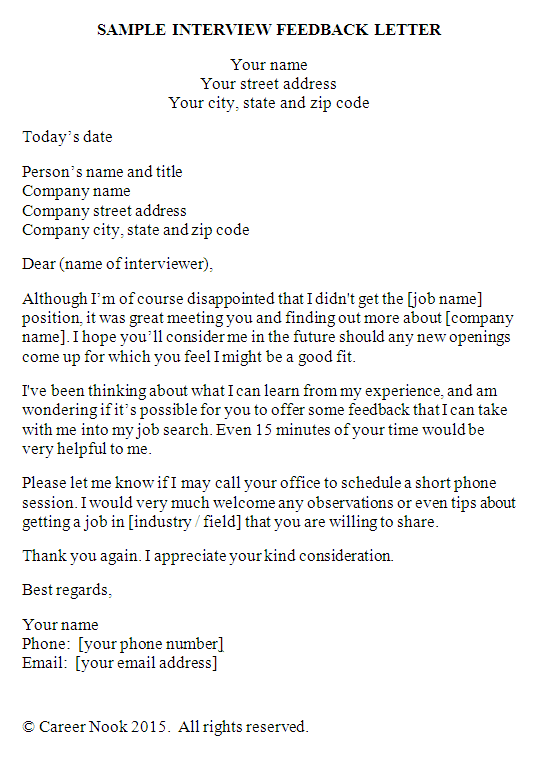
Interview Feedback Letter
An interview feedback letter can be used after an interview to provide comments about the candidate’s performance. It can be positive, constructive, or related to areas where the candidate could improve.
Academic Feedback Letter
An academic feedback letter provides written comments about a student’s academic work, progress, performance, participation, or development. Teachers, instructors, schools, and educational organizations may use this type of letter.
Feedback Letter to a Referrer
A feedback letter to a referrer can be used to provide an update or evaluation to someone who referred a customer, candidate, client, applicant, or professional contact.
Request for Feedback Letter
Sometimes the purpose is not to give feedback but to ask for feedback. A request for feedback letter can be sent to customers, employees, clients, managers, interviewers, students, or other people who can provide useful comments about a product, service, performance, or experience.
Positive Feedback vs. Negative Feedback
Both positive and negative feedback can be valuable when written correctly.
Positive feedback focuses on successful performance and recognizes what the recipient did well. It can improve motivation and reinforce desirable behavior.
Negative or constructive feedback identifies a problem or area for improvement. It should explain the issue clearly and, when possible, provide a practical recommendation.
The goal of constructive feedback is not simply to point out mistakes. It should help the recipient understand how the situation could be improved in the future.
Tips for Writing Effective Feedback
Follow these tips when preparing a professional feedback letter:
- Be honest without being unnecessarily harsh.
- Focus on specific actions, behavior, or results.
- Use facts and examples to support your comments.
- Keep the feedback relevant to the subject.
- Avoid personal attacks and emotional language.
- Mention positive aspects when appropriate.
- Explain areas that need improvement.
- Offer practical suggestions where possible.
- Use polite and professional language.
- Keep the letter concise and easy to understand.
- Proofread the letter before sending it.
- Protect confidential or sensitive information when necessary.
Why Is Constructive Feedback Important?
Constructive feedback helps people and organizations understand what is working and where improvements may be needed. In a workplace, effective feedback can support employee development and better performance. In customer service, feedback can help businesses identify problems and improve the customer experience.
A professional feedback letter also creates a written record of an observation or evaluation. When feedback is specific and respectful, it is more likely to be understood and acted upon.
Use Our Sample Feedback Letters
The sample feedback letters on this page cover several common situations, including job interview feedback, positive feedback, customer service feedback, hotel guest feedback, negative feedback, customer complaints, client feedback, academic feedback, and requests for feedback.
Use these feedback letter samples and templates as a starting point for your own correspondence. Replace the example information with your own names, dates, circumstances, observations, and recommendations.
Remember that a sample letter should be customized for your specific situation. The most effective feedback is personal, accurate, specific, and relevant to the person or organization receiving it.
Get Feedback Letter Samples Here
Job Interview Feedback Letter


Positive Feedback Letter

Thank You/Feedback Letter For Customer Services

Feedback Letter To Guest From Hotel Manager

Negative Feedback Letter

Feedback Letter To Customer Complaint

Feedback Letter From Happy Customer

Client Feedback Letter

Sample Interview Feedback Letter

Academic Feedback Letter

Feedback Letter To Referrer

Request For Feedback Letter
Frequently Asked Questions About Feedback Letters
What is a feedback letter?
A feedback letter is a written communication used to provide an opinion, evaluation, observation, or response about a person, product, service, interview, event, experience, or transaction.
How do I write a good feedback letter?
Start by explaining why you are providing feedback. Describe your experience or observations clearly, mention positive aspects where appropriate, identify areas for improvement, and end with a professional closing. Keep your feedback specific, honest, respectful, and concise.
What should I include in a feedback letter?
A feedback letter may include the purpose of the feedback, relevant background information, specific observations, positive comments, areas for improvement, recommendations, and an appropriate closing.
How do I write a positive feedback letter?
A positive feedback letter should clearly explain what the recipient did well. Mention specific actions, results, or aspects of the service that impressed you instead of using only general compliments.
How do I write a negative feedback letter professionally?
Describe the problem objectively and explain how it affected you or the outcome. Avoid insulting or blaming the recipient. Focus on facts and, when appropriate, suggest what could be done differently.
What is constructive feedback?
Constructive feedback provides useful comments intended to support improvement. It identifies a specific issue while explaining how performance, service, communication, or another aspect could be improved.
Can feedback be given in a formal letter?
Yes. A formal feedback letter is particularly appropriate in professional, business, educational, recruitment, customer service, and organizational situations where a written record is useful.
What is an employee feedback letter?
An employee feedback letter provides written comments about an employee’s performance, conduct, achievements, strengths, or areas requiring improvement. It can be used as part of employee recognition, performance evaluation, or professional development.
What is a customer feedback letter?
A customer feedback letter is written by a customer to provide comments about a company’s product, service, staff, or overall experience. Businesses can also use customer feedback response letters to acknowledge and address customer comments.
What is an interview feedback letter?
An interview feedback letter provides an evaluation of a candidate’s interview performance. It may discuss qualifications, communication, responses, strengths, weaknesses, and overall suitability for the position.
Can I use a feedback letter template?
Yes. A feedback letter template provides a convenient structure that you can customize. Replace the sample text with information relevant to your own situation and make sure the final letter accurately reflects your experience or evaluation.
How to Write and Customize Feedback Letters
Choose the example that best matches the proposal or requested action. Use it as a framework, rewrite the opening for the intended reader, and replace every placeholder with verified information.
Details to prepare
Collect supporting reasons, benefits, evidence, limits, and a clear response deadline. Relevant facts make feedback letters easier to assess and reduce follow-up questions. Remove confidential, outdated, or unrelated sample wording.
Tone and final review
Keep the language respectful and convincing. State the expected action clearly, check names, dates, figures, contact details and attachments, and retain a copy when the matter is important.
Related Letter Resources
Frequently Asked Questions About Feedback Letters
What is a feedback letter?
A feedback letter is a written communication used to provide an opinion, evaluation, observation, or response about a person, product, service, interview, event, experience, or transaction.
How do I write a good feedback letter?
Start by explaining why you are providing feedback. Describe your experience or observations clearly, mention positive aspects where appropriate, identify areas for improvement, and end with a professional closing. Keep your feedback specific, honest, respectful, and concise.
What should I include in a feedback letter?
A feedback letter may include the purpose of the feedback, relevant background information, specific observations, positive comments, areas for improvement, recommendations, and an appropriate closing.
How do I write a positive feedback letter?
A positive feedback letter should clearly explain what the recipient did well. Mention specific actions, results, or aspects of the service that impressed you instead of using only general compliments.
How do I write a negative feedback letter professionally?
Describe the problem objectively and explain how it affected you or the outcome. Avoid insulting or blaming the recipient. Focus on facts and, when appropriate, suggest what could be done differently.
What is constructive feedback?
Constructive feedback provides useful comments intended to support improvement. It identifies a specific issue while explaining how performance, service, communication, or another aspect could be improved.
Can feedback be given in a formal letter?
Yes. A formal feedback letter is particularly appropriate in professional, business, educational, recruitment, customer service, and organizational situations where a written record is useful.
What is an employee feedback letter?
An employee feedback letter provides written comments about an employee’s performance, conduct, achievements, strengths, or areas requiring improvement. It can be used as part of employee recognition, performance evaluation, or professional development.
What is a customer feedback letter?
A customer feedback letter is written by a customer to provide comments about a company’s product, service, staff, or overall experience. Businesses can also use customer feedback response letters to acknowledge and address customer comments.
What is an interview feedback letter?
An interview feedback letter provides an evaluation of a candidate’s interview performance. It may discuss qualifications, communication, responses, strengths, weaknesses, and overall suitability for the position.
Can I use a feedback letter template?
Yes. A feedback letter template provides a convenient structure that you can customize. Replace the sample text with information relevant to your own situation and make sure the final letter accurately reflects your experience or evaluation.
How to Customize Feedback Letters Before Use
Use the examples on this page as a starting point, then adapt the wording to the exact reader and purpose. Replace every placeholder with accurate names, dates, reference numbers, contact details, deadlines, and supporting facts. Keep the message focused on one main outcome so the recipient can understand and respond without guessing.
Before sending your feedback letters, check that the tone suits the relationship, the subject line is specific, and the requested action is easy to identify. Remove irrelevant sample text, verify attachments, and proofread for grammar, consistency, and factual accuracy. A concise, personalized letter is usually more credible than a generic copy.